
A payday loan repayment date might feel like a small cloud on the calendar, but it doesn’t have to. Whether you’re managing payday loans, installment loans, or another kind of short-term borrowing, the difference between a smooth payoff and a stressful one usually comes down to a few days of planning.
Too many people wait until the due date to gather the money, then feel caught off guard when a paycheck lands late or an unexpected cost pops up. The good news is that budgeting around your payday loan repayment doesn’t require a finance degree or a rigid spreadsheet.
In this guide, you’ll learn simple, practical ways to plan ahead, avoid common slip-ups, and walk into your due date feeling fully in control.
What it means to budget around a repayment date
Budgeting around your loan repayment date simply means organizing your money so the payment is ready and waiting before it’s due. It applies to nearly any kind of borrowing, from payday loans that come due on your next paycheck to installment loans repaid in scheduled pieces over time.
The core idea is timing. Instead of treating repayment as a single big hurdle, you can spread the effort across the days and paychecks leading up to it. That way, the money is set aside gradually. When the date arrives, the payment is already covered.
The approach varies a bit, depending on the type of loan. With payday loans, repayment is often tied directly to your next paycheck, so the window is short and the key is knowing exactly when the funds will be collected.
With installment loans, you’re making smaller scheduled payments over a longer stretch, which gives you more room to build a repeatable rhythm. But it also means you’ll want a plan that holds up month after month. In both cases, the principle is the same: prepare a little at a time rather than all at once.
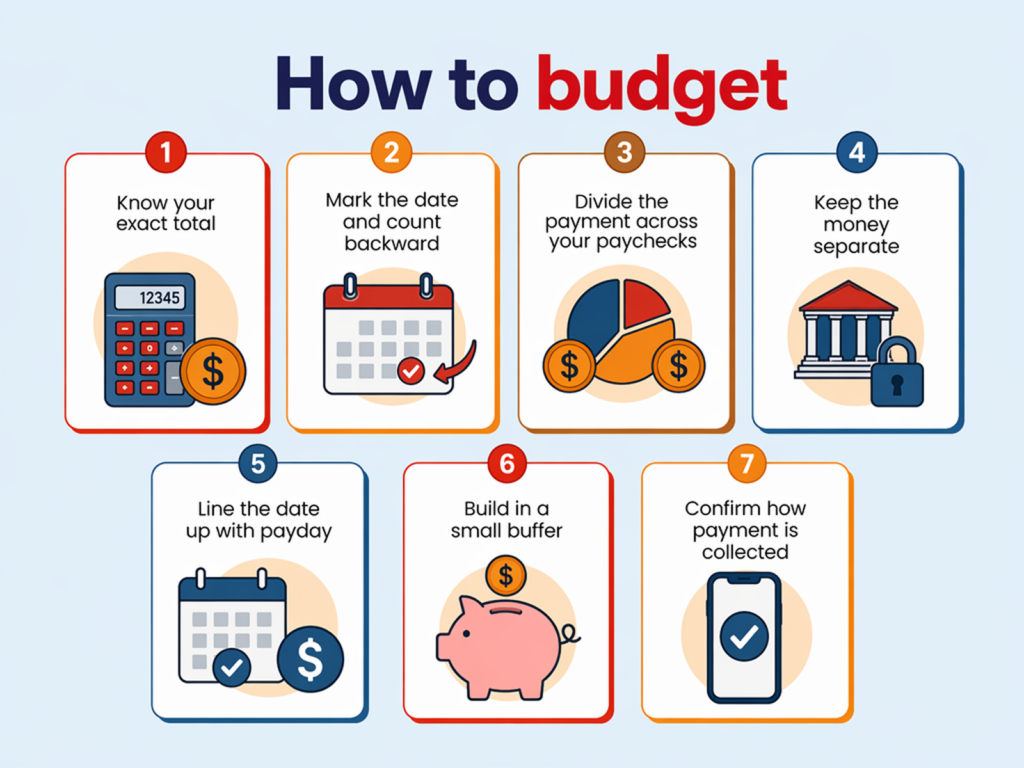
Step-by-step on how to budget for your loan repayment
1. Know your exact total. Find out the full amount due, including any interest or fees.
2. Mark the date and count backward. Put the due date on your calendar, then note how many paychecks you’ll receive before it arrives. This tells you how much runway you have to work with.
3. Divide the payment across your paychecks. If you owe $400 and you’ll get paid twice before the date, set aside $200 from each check. Smaller, steady amounts feel far more manageable than one large sum.
4. Keep the money separate. Move your set-aside funds into a different account or envelope so they don’t blend into everyday spending. A separate savings account works well, and if your bank offers automatic transfers on payday, setting one up means the money moves itself without you having to think about it.
5. Line the date up with payday. If your repayment falls right before you get paid, when your balance is lowest, see whether you can shift it to right after payday instead. Many lenders are happy to adjust the date, and this one change can make every future payment noticeably easier to cover.
6. Build in a small buffer. Aim to have the money ready a few days early. A payment that clears ahead of schedule spares you late fees and last-minute stress. It also protects you if a transfer takes an extra day to process, which happens more often than most people expect.
7. Confirm how the payment is collected. Know whether your payment is automatically debited or submitted by you, and make sure the funds are available in time. A quick check here prevents both missed payments and surprise overdrafts.
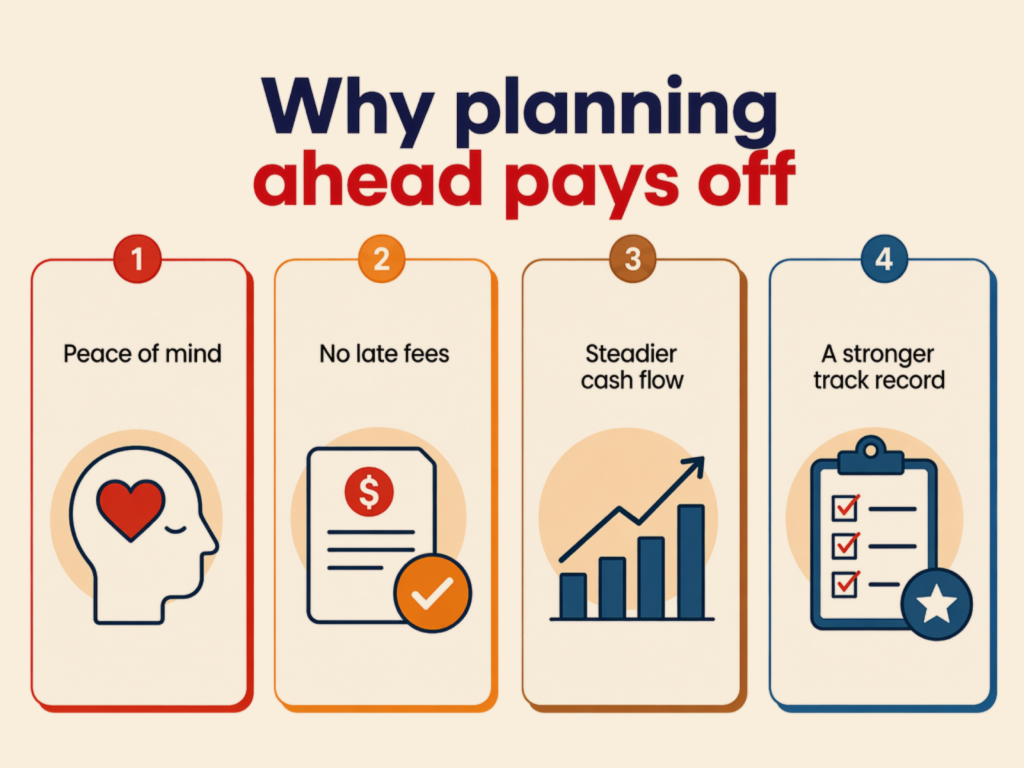
Why planning ahead pays off
Taking a little time to budget around your repayment date brings real, tangible benefits:
Peace of mind
There’s a particular kind of stress that comes from knowing a payment is looming and not being sure where the money will come from. Budgeting ahead erases that entirely. When the funds are already set aside, the due date arrives as a non-event. That mental relief is often the benefit people notice first.
No late fees
Late fees are among the most avoidable costs of borrowing, yet they catch people out again and again. Having your payment prepared a few days early means it clears on time, every time, and keeps more of your money working for you instead of going toward penalties.
Steadier cash flow
Trying to cover a full repayment out of a single paycheck can leave that week feeling painfully tight, forcing you to stretch on groceries, gas, or other essentials. Spreading the amount across the paychecks leading up to the due date smooths out those peaks and valleys, so no single week has to absorb the whole hit. Your money feels more stable and predictable throughout the month.
A stronger track record
Every on-time payment is a small deposit into your financial reputation. Consistent repayment builds habits that carry over into the rest of your financial life. It also strengthens your standing with lenders over time.
Common mistakes to avoid
Even with the best intentions, a few common missteps can trip people up. Here’s what to watch for:
Waiting until the due date to find the money
Gathering the full payment on the due date leaves no room for surprises. Setting the money aside gradually across earlier paychecks removes that risk and takes the pressure off the day itself.
Budgeting only the amount borrowed
It’s easy to plan around the figure you first borrowed and forget that interest or fees are part of the total. Always plan for the full payoff amount so you’re never caught short at the last minute or surprised by a larger number than you expected.
Dipping into the set-aside money
Once funds are earmarked for repayment, spending them “this one time” tends to snowball. One small exception quietly becomes several. Keeping the money in a separate account makes it far easier to leave it untouched until it’s needed.
Ignoring how the date lines up with payday
If your repayment falls when your balance is at its lowest, you’re setting yourself up to struggle every cycle. Ask about shifting the date to right after you get paid, when the funds are available.
Cutting the timing too close
Scheduling for the exact due date leaves no margin if a transfer takes an extra day to clear. Aim to have everything in place a few days early, so a small delay never turns into a late payment.
Staying quiet when money gets tight
This is the big one. It’s tempting to go silent when you’re worried about a payment, but reaching out to your lender before the due date almost always opens up helpful options that are much harder to arrange once a payment is already past due.
Adjusting your budget in tighter months
Some months are simply harder than others. Between holidays, insurance premiums, back-to-school costs, or a surprise car repair, there will be times when setting money aside for repayment feels like more of a stretch. That’s completely normal, and planning for it ahead of time makes all the difference.
The trick is to look a little further down the calendar. When you can see a tight month coming, start setting aside your repayment amount a bit earlier. Even a few extra dollars per paycheck in the weeks beforehand adds up.
You might also trim a small, flexible expense for a short stretch, like a subscription or a few meals out, and redirect that money toward your payday loan repayment.
And if a month gets tight despite your best efforts, remember that there are options. Reaching out early about an extension keeps you in control rather than caught off guard.
Data and statistics
A few figures that put short-term borrowing in perspective:
- Roughly 12 million Americans use payday loans each year, showing how common this form of short-term borrowing is.
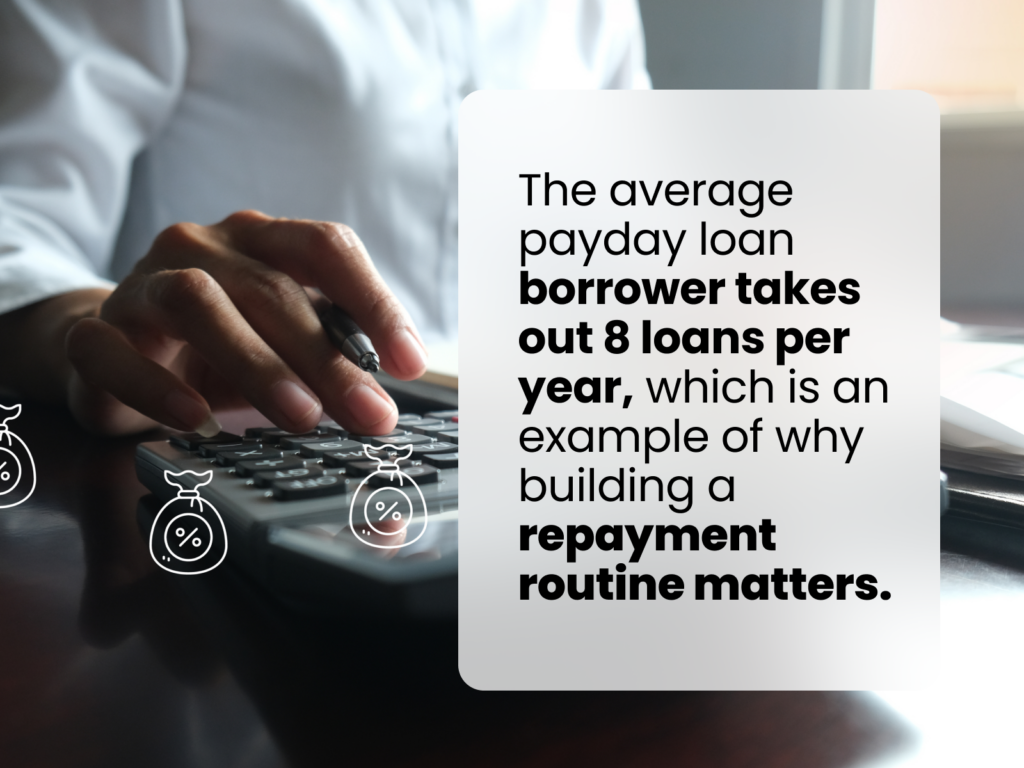
- The average payday loan borrower takes out 8 loans per year, underscoring why building a repayment routine matters.
- The Consumer Financial Protection Bureau notes that borrowers who plan repayment around their pay schedule are far better positioned to repay on time and avoid rolling a loan over.
FAQ
How far ahead should I start budgeting for my repayment date?
Ideally, begin as soon as you take out the loan. Knowing your due date and total amount up front lets you spread the payment across every paycheck in between, which keeps each contribution small and easy.
Can I change my loan repayment date if it doesn’t line up with payday?
Often, yes. Many lenders — including USA Cash Services — are happy to work with you on adjusting a due date. Reach out before the payment due date to explore your options.
What should I do if I realize I can’t make my payment on time?
Contact your lender right away, before the due date. Options like an extension on your existing loan are almost always easier to arrange before a payment is missed than after.
Is it better to pay early if I have the money?
Paying a few days early is a great habit. It helps you avoid late fees, guards against transfer delays, and gives you the peace of mind that the payment is complete.
How can I make budgeting for repayment a lasting habit?
Start small and keep it consistent. Setting up an automatic transfer to a separate account on each payday takes the effort out of it, and lining your due date up with your pay schedule keeps every payment easy to cover. Over time, the routine takes care of itself.
USA Cash Services is in your corner. Apply today.
Here’s the bottom line: budgeting around your loan repayment date is about giving yourself a little breathing room and a plan you can count on. Do that, and your due date becomes one more thing you’ve already handled.
And you don’t have to figure it out alone. USA Cash Services is here for you at every step, whether you need a new payday loan to cover an unexpected expense or a simple extension on a loan you already have. We believe in clear terms, honest answers, and treating you like a person. Reach out to USA Cash Services today, and let’s make your next repayment your smoothest one yet.